Category Archives: news

Latest news and update

The Fundamentals of Torque Control in Modern Assembly Lines

The Fundamentals of Torque Control in Modern Assembly Lines

Empowering Precision, Safety, and Efficiency with ZIPPTORK Smart Torque Solutions


In every manufacturing sector—from automotive and aerospace to medical devices and electronics—the importance of torque control cannot be overstated. A single improperly tightened bolt can lead to vehicle wheel detachment, life-critical instrument failures, or malfunctioning electronic products.

Without torque control, engineers risk product failure, safety incidents, and rising costs from scrap and rework. Yet, in many factories, torque management remains overlooked or misunderstood, especially in traditional pneumatic tool environments.


Why Torque Control Matters


Torque represents the rotational force applied to a fastener. Controlling it ensures the proper clamp load—the real force holding components together. When the torque is too low, joints loosen under vibration; when it is too high, threads strip or parts deform.

Whether assembling a pacemaker, repairing an aircraft engine, or mounting heavy equipment, achieving the correct torque for every bolt is essential for safety, reliability, and traceability.


Variables That Affect Torque Accuracy


Several factors influence torque:


  • Friction coefficients (thread, under-head, surface)

  • Tool type and condition (impact, clutch, pulse)

  • Joint characteristics (soft vs. hard joints)

  • Operator technique

  • Environmental factors such as temperature or vibration


These variables make it critical to measure and monitor torque, rather than relying solely on theoretical values or tool calibration.


ZIPPTORK: Bridging OT and IT for Smart Torque Control


Traditional pneumatic tools excel in durability and power, but historically lacked data feedback. ZIPPTORK bridges this gap by integrating Operational Technology (OT) with Information Technology (IT)—enabling smart, traceable fastening under Industry 4.0.


1. Smart Torque Controllers (TCA/TCB/TCC Series)


ZIPPTORK torque controllers transform conventional pneumatic or hydraulic tools into precision-controlled systems.


  • Regulate output torque in real time

  • Interface with torque and bolt-load sensors

  • Record torque-angle curves and time-series data

  • Transmit results to IIoT/MES systems via Wi-Fi or Bluetooth


This enables production lines to automatically log tightening data, ensuring every fastener meets its specification.


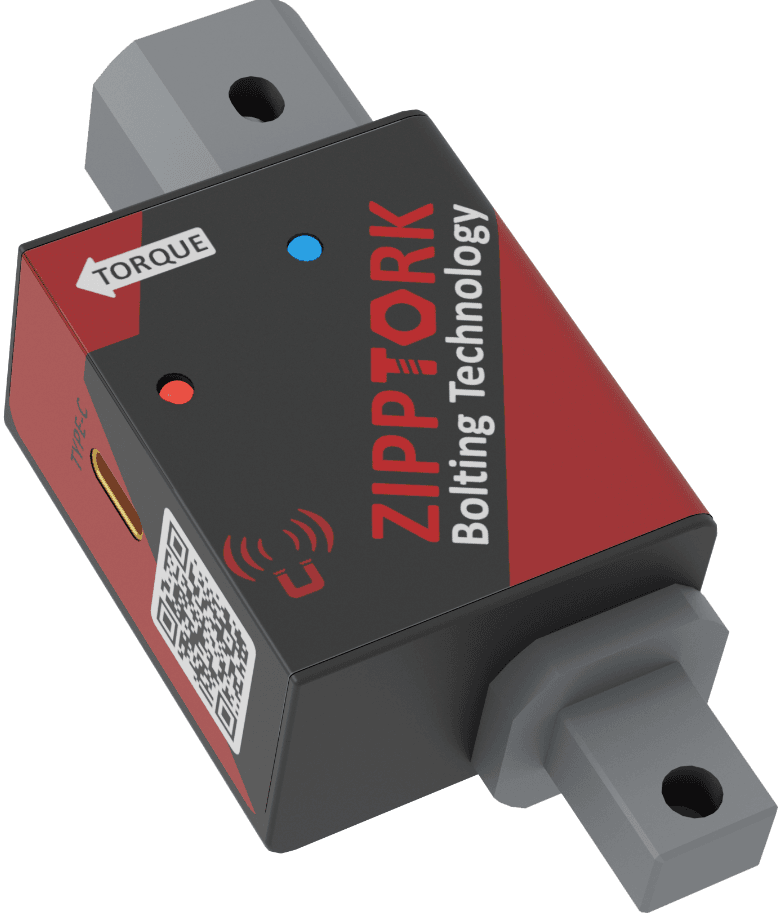
2. Wireless Rotary Torque Transducers (TTES / TTEB / TTAS / STA Series)


ZIPPTORK’s patented anti-vibration wireless transducers can be integrated directly into impact, pulse, or clutch-type wrenches.


  • Measure torque dynamically under shock and vibration

  • Transmit signals wirelessly to controllers or gateways

  • Eliminate wiring constraints on moving tools

  • Maintain ±5–10 % accuracy in demanding environments


These transducers bring real-time torque visibility to pneumatic tools—once considered impossible.


3. Bolt Load Monitoring Systems (BLT & SWC Series)


For critical joints where clamp force matters more than torque, ZIPPTORK offers bolt-load transducers and sensing washers.

They measure actual bolt tension, not just torque, providing a direct measure of joint integrity.

This ensures optimal preload and prevents fatigue or loosening in heavy-duty applications such as wind turbines, rail bogies, and structural assemblies.


Smart Assembly Line Integration


In a modern assembly line, ZIPPTORK systems form a closed-loop fastening ecosystem:

  1. The operator uses a pneumatic impact or pulse tool equipped with a wireless torque transducer.

  2. The torque controller receives live data and applies real-time correction or cutoff logic.

  3. Each fastening record (torque, angle, time, status) is transmitted to the plant’s MES/QMS/SPC systems.

  4. Supervisors gain traceability reports, SPC charts, and quality analytics dashboards for complete transparency.


This seamless integration turns legacy pneumatic lines into data-driven smart assembly stations, ready for Industry 4.0 compliance.


From Precision to Prediction


Torque control is not merely a quality requirement—it’s a foundation of safety, reliability, and digital manufacturing. With ZIPPTORK’s advanced controllers, sensors, and bolt-load monitoring systems, manufacturers can ensure every joint is tightened correctly, verified instantly, and traceable globally.

By transforming traditional pneumatic tools into intelligent systems, ZIPPTORK empowers industries to achieve:


  • Higher accuracy

  • Fewer fastening errors

  • Complete traceability

  • Predictive maintenance and quality insights


ZIPPTORK – Smart, Affordable, Traceable.

The future of torque control and bolt-load monitoring for Industry 4.0.

ZIPP GROUP to Showcase Innovative Solutions at Taipei Aerospace & Defense Technology Exhibition (TADTE) 2025

STA Transducer

ZIPP GROUP to Showcase Innovative Solutions at Taipei Aerospace

&

Defense Technology Exhibition (TADTE) 2025


booth direction
booth direction


ZIPP GROUP is proud to announce its participation in the Taipei Aerospace & Defense Technology Exhibition (TADTE) 2025, taking place from September 18 to 20, 2025, at the Taipei Nangang Exhibition Center, Hall 1 (TaiNEX 1), 1F, located at No. 1, Jingmao 2nd Rd., Nangang District, Taipei, Taiwan. Visitors can find ZIPP GROUP at Booth I0801a.

As one of Asia’s leading international platforms for aerospace and defense industries, TADTE brings together global innovators, manufacturers, and defense technology providers. ZIPP GROUP will showcase its advanced solutions and cutting-edge technologies designed to meet the evolving demands of aerospace and defense applications.

The company looks forward to engaging with industry professionals, partners, and visitors to explore collaborative opportunities and present how ZIPP GROUP’s expertise in precision engineering and innovation contributes to high-performance and reliable solutions for critical missions.

ZIPP GROUP warmly invites all attendees to visit Booth I0801a to experience its latest developments firsthand.

Exhibition details @ https://www.tadte.com.tw

ZIPPTORK Wireless Torque Transducer: Redefining Torque Measurement and Control

wireless torque transducer

In the world of industrial assembly and maintenance, precision, durability, and efficiency are paramount. Traditional torque tools such as impact wrenches and oil pulse tools are widely used, but they often face limitations in torque accuracy, process monitoring, and long-term reliability. Addressing these challenges, ZIPPTORK introduces its groundbreaking wireless torque transducer, the world’s first anti-vibration and anti-shock torque sensor designed to withstand the harsh demands of high-impact tools—while delivering laboratory-grade accuracy in real-world working environments.


Real-Time Torque Measurement with ±1% Accuracy


ZIPPTORK’s wireless torque transducer sets a new benchmark in torque monitoring technology. With ±1% accuracy, it ensures precise tightening torque measurement and real-time process monitoring, even in high-volume production lines or demanding field operations. By integrating seamlessly with existing torque tools, this compact device provides engineers, technicians, and operators with confidence that every bolted joint meets strict quality standards.


The World’s First Anti-Vibration & Anti-Shock Torque Sensor


Unlike conventional torque sensors that quickly deteriorate under repeated shock loads, ZIPPTORK’s wireless torque transducer is engineered to handle excessive vibration and impact energy. This makes it uniquely compatible with torque tools such as impact wrenches, where repeated hammering would typically destroy traditional torque measurement devices. The result: a torque sensor that maintains durability and reliability without sacrificing accuracy, even under the harshest conditions.


Converting an Impact Wrench into a Torque-Controlled Tool


When paired with ZIPPTORK’s TCA, TCB, or TCC torque controllers, the wireless torque transducer transforms a standard impact wrench into a torque-controlled impact wrench with minimal upgrade cost. This innovation eliminates the need for expensive, high-maintenance torque tools such as oil pulse wrenches, offering a cost-effective, low-maintenance alternative that combines the power of impact tools with precise torque control.


Compact Wireless Design with Extended Battery Life


Designed with user convenience in mind, the ZIPPTORK wireless torque transducer features:

  • Compact and lightweight design for easy integration into existing torque tools.

  • Wireless operation for improved mobility and reduced setup complexity.

  • Multiple wireless protocols—RF 2.4G, WiFi, and Bluetooth 5.0—for compatibility across diverse working environments and conditions.

  • Extended battery life provides a minimum of 8 hours of continuous operation, ensuring uninterrupted productivity during long shifts.


Advanced Process Monitoring Features


Beyond torque measurement, ZIPPTORK’s wireless torque transducer offers pulse count monitoring to prevent common tightening errors, such as incomplete tightening or double hits. Combined with its ability to record and transmit real-time torque data, this functionality enables full process traceability—ensuring compliance with quality standards and reducing the risk of rework or product failure.


Transforming Torque Measurement Standards


By bringing together ±1% accuracy, anti-vibration durability, wireless connectivity, and torque control compatibility, ZIPPTORK’s wireless torque transducer represents a true evolution in torque technology. Whether in automotive assembly, aerospace applications, heavy equipment maintenance, or general manufacturing, this solution empowers companies to achieve greater precision, efficiency, and cost savings.

With ZIPPTORK, the future of torque measurement is smarter, tougher, and more reliable than ever before.

How ZIPP TOOL’s Low-Vibration & Shock-Reduced Air Tools Help Reduce Hand-Arm Vibration Syndrome (HAVS)

How ZIPP TOOL’s Low-Vibration & Shock-Reduced Air Tools Help Reduce Hand-Arm Vibration Syndrome (HAVS)


Hand-Arm Vibration Syndrome (HAVS) is a progressive, preventable condition caused by prolonged exposure to tool-generated vibration. It can lead to numbness, reduced dexterity, pain, and—in severe cases—irreversible circulatory and neurological damage. For manufacturers, shipyards, foundries, and maintenance crews, HAVS isn’t just a health risk; it’s a quality, productivity, and liability risk too.


ZIPP TOOL designs low-vibration and shock-reduced pneumatic tools to break this link. Below is a practical, engineering-first look at how ZIPP’s design choices translate into measurably lower vibration at the operator’s hand, and how to implement them to reduce HAVS risk across your facility.


HAVS in a Nutshell (and why “low vibration” matters)


  • Root cause: Repeated transmission of vibratory energy into the hand and arm during grinding, scaling, sanding, cutting, riveting, etc.
  • Risk drivers: High vibration magnitude, long trigger time, poor ergonomics, cold environments, and insufficient maintenance.
  • Consequences: Tingling and numbness, loss of grip strength and tactile feedback, reduced fine motor control, pain, and white-finger attacks in cold.
  • Control strategy: Reduce the vibration magnitude at the source (engineering controls), minimize time-weighted exposure, improve ergonomics and process planning, and keep tools in peak mechanical condition.


“Low vibration” is not a label—it’s an engineering outcome. Every 1–2 m/s² saved at the hand can significantly extend safe trigger time and reduce cumulative daily exposure.


How ZIPP TOOL Reduces Vibration at the Source


ZIPP’s portfolio includes purpose-built, low-vibration and shock-reduced models such as the ZNS-392 Shock-Reduced Needle Scaler and the ZS350D Industrial Air Saw (Extreme Low Vibration), alongside grinders, sanders, and impact tools designed with vibration mitigation baked in. Here’s what’s under the hood:


1) Tuned Counterbalancing & Mass Optimization


Unbalanced reciprocating or rotating masses are a primary vibration source. ZIPP uses tuned counterweights and optimized rotor/rod mass to cancel out first-order forces in saws, scalers, and grinders—shrinking the energy transmitted to the handle.


Result: Smoother feel under load, less tingling after a cycle, and better cut or grind quality.


2) Isolated Handle Modules & Damping Interfaces


On select models, the handle is decoupled from the motor frame via elastomeric isolators or engineered damping stacks. In scalers, shock-absorbing linkages disrupt the spike-y impulses from each needle/striker.


Result: Lower peak accelerations (the “punches” that fatigue nerves), not just lower RMS levels.


3) Low-Recoil Percussive Systems


In shock-reduced needle scalers like the ZNS-392, the striker mass, impact frequency, and air metering are balanced to minimize recoil while maintaining removal rate. Needle geometry and bundles are selected to reduce chatter without smearing scale.


Result: Faster surface prep with less hand sting and fewer micro-pauses from operator discomfort.


4) Precision Airflow & Exhaust Management


ZIPP’s valving and exhaust routing avoid pressure oscillations that amplify vibration and noise. Silenced exhaust not only protects hearing; it also reduces the pressure fluctuations that can couple back into the tool body.


Result: Quieter, steadier tools that are easier to control—critical for fine work and long shifts.


5) Ergonomic Geometry & Grip Materials


Neutral wrist angles, contoured grips, and anti-slip surfaces distribute contact forces across the palm and fingers. On grinders and saws, carefully chosen grip diameters reduce pinch forces and white-knuckle squeezing—both known HAVS multipliers.


Result: Less clamping force required for control → less transmitted vibration and less fatigue.


6) Balanced Accessories: Discs, Needles, Blades


A low-vibration tool can still vibrate if the accessory is poorly chosen. ZIPP validates balanced abrasives, matched needles, and tuned saw blades to maintain the tool’s designed balance.


Result: You get the vibration performance you paid for—consistently.


Putting It to Work: A HAVS-Reduction Playbook with ZIPP


Lower-vibration tools are the cornerstone, but results come from system thinking. Here’s a concise plan you can implement immediately.


Step 1 — Audit & Baseline

  • Identify high-exposure tasks (e.g., chipping, heavy grinding, scaling, long cutting passes).
  • Measure or estimate daily trigger times per task and operator.
  • Check tool condition (bearings, collets, needles, blades, lubrication). Worn components massively inflate vibration.


Step 2 — Engineer Out Vibration with ZIPP

  • Replace legacy or generic models in the worst tasks with ZIPP shock-reduced or extreme low-vibration equivalents (e.g., ZNS-392 for scaling, ZS350D for cutting).
  • For grinders/sanders, move to ZIPP models with counterbalanced rotors and isolated handles; pair with balanced abrasives.


Step 3 — Optimize Process & Accessories

  • Right-size the tool (power and speed) to the job. Oversized tools cause over-gripping; undersized tools force longer trigger times.
  • Use matched, balanced consumables (needles, blades, discs). Replace them on schedule.
  • Stabilize workpieces to reduce operator-induced vibration.


Step 4 — Maintain for Vibration (Not Just Uptime)

  • Implement a preventive maintenance cadence: lubrication, bearing checks, spindle runout, hose integrity, and regulator settings.
  • Create a “vibration drift” checklist so any increase in tingle, noise, or heat triggers inspection.


Step 5 — Manage Exposure Time

  • Rotate tasks to limit time-weighted exposure per operator.
  • Build standard work: short, efficient cycles with planned breaks.
  • Encourage light, controlled grip; heavier gloves don’t fix vibration, but anti-vibration gloves can be a supplementary control where appropriate.


Step 6 — Train, Track, Improve

  • Train on proper stance, neutral wrist, and controlled feed pressure—pushing harder rarely makes the job faster and often spikes vibration.
  • Record trigger times by job and tool. Use simple tags or digital counters.
  • Review incident reports and iterate on tool selection—upgrading more stations to low-vibration models as ROI becomes clear.


Where ZIPP Tools Fit Best


  • Shipbuilding & MRO: Needle scaling, weld cleanup, gasket removal—swap legacy scalers for ZNS-392 to cut recoil and operator breaks while maintaining removal rates.
  • Foundry & Fabrication: Heavy grind and blend—move to counterbalanced ZIPP grinders with isolated handles to tame the roughest edges without fatiguing hands.
  • Automotive & Rail: Panel prep, spot repairs, and cut-outs—ZS350D delivers clean cuts with less buzz, improving accuracy in tight quarters.
  • Construction & Infrastructure: Rebar cleanup, shuttering, and surface preparation—shock-reduced percussive tools minimize nerve-irritating impulse peaks.


Quality, Throughput, and ROI—Not Just Compliance


A common misconception is that HAVS controls are a cost center. In practice, low-vibration tools deliver:


  • Higher first-pass quality: steadier hands → straighter cuts, better surface finish, fewer reworks.
  • More sustained productivity: operators stay accurate deeper into the shift.
  • Lower absenteeism and turnover: lead to less discomfort and fatigue, resulting in better morale.
  • Reduced liability: proactive HAVS controls demonstrate a strong duty of care to auditors and insurers.


Facilities often find that the productivity and quality gains alone justify upgrading critical stations to ZIPP shock-reduced models—before accounting for any reduction in injury risk and claims.


Implementation Checklist


  1. List tasks with the highest vibration exposure (by job step).
  2. Map current tools used at each step (make/model/accessory).
  3. Select ZIPP replacements for the top 3 exposure tasks (e.g., ZNS-392, ZS350D, low-vibe grinders/sanders).
  4. Standardize accessories (balanced discs/needles/blades matched to the tool).
  5. Set PM intervals focused on vibration drivers (bearings, runout, needle condition, lubrication, air pressure).
  6. Train operators on light grip, neutral wrist, controlled feed, and micro-breaks.
  7. Track trigger time and near-miss tingling reports; investigate any upticks immediately.
  8. Review quarterly and expand low-vibration tooling where exposure remains high.


Why ZIPP TOOL?


  • Purpose-built low-vibration designs (shock-reduced scalers, extreme low-vibration saws, counterbalanced grinders/sanders).
  • Ergonomics and control prioritized: neutral wrist geometry, grippy surfaces, balanced weight distribution.
  • System approach: Tools, accessories, and maintenance guidance aligned to preserve low-vibration performance in real-world use.
  • Industrial durability: Built for shipyards, foundries, fabrication shops, and fleet maintenance—where uptime matters.


Quick safety note


Switching to ZIPP low-vibration and shock-reduced air tools is one of the highest-leverage actions you can take to reduce HAVS risk. Pair the tools with good work design, proper accessories, and disciplined maintenance, and you’ll see safer hands, steadier work, and stronger throughput.

Low vibration & shock reduced air tools

Low Vibration Air Tools: Protecting Workers from Hand-Arm Vibration Syndrome


Hand-Arm Vibration Syndrome (HAVS) is a serious and irreversible medical condition caused by prolonged exposure to vibration, often from power tools such as grinders, chipping hammers, and impact wrenches. While HAVS develops gradually, its effects—ranging from tingling fingers to permanent loss of grip strength—can significantly impact a worker’s quality of life. Fortunately, modern low vibration or shock-reduced air tools offer an effective way to reduce these risks.


Understanding Hand-Arm Vibration Syndrome


HAVS occurs when repeated vibration damages blood vessels, nerves, and muscles in the hand and arm. Common symptoms include:

  • Numbness or tingling in fingers

  • Reduced dexterity or grip strength

  • “White finger” (blanching of fingers due to poor circulation)

  • Chronic pain and discomfort


According to occupational safety standards, such as the EU’s Vibration at Work Regulations and OSHA’s guidelines, reducing vibration exposure is a critical part of workplace health and safety.


How Low Vibration Air Tools Make a Difference


Traditional air tools transfer a significant amount of vibration directly into the operator’s hands. Over time, this repeated exposure accelerates the development of HAVS. Shock-reduced air tools are specifically engineered to limit this impact.


Key design features include:


  1. Vibration-Dampening Mechanisms – Specially designed internal components, such as shock-absorbing springs or air-cushion chambers, reduce the transfer of vibration.

  2. Ergonomic Grip Design – Handles with vibration-isolating materials, like rubber or composite grips, minimize the amount of energy reaching the hand.

  3. Optimized Tool Balance – Well-balanced tools reduce strain on the wrists and arms, preventing excessive force application.

  4. Advanced Impact Mechanisms – Systems like double hammer or twin dog impacts distribute force more evenly, lowering peak vibration levels.


Benefits Beyond Health


Adopting low vibration air tools doesn’t just protect workers—it also improves productivity and efficiency:


  • Longer working periods without fatigue – Reduced vibration means operators can work comfortably for longer durations.

  • Higher precision and control – Less hand strain leads to more accurate work, especially in detailed applications.

  • Lower absenteeism and turnover – Healthy employees are less likely to take time off due to vibration-related injuries.

  • Compliance with safety regulations – Using low vibration tools helps companies meet legal vibration exposure limits.


Best Practices for Preventing HAVS


While low vibration tools are an essential step, HAVS prevention also requires proper work practices:


  • Rotate tasks to limit individual exposure time.

  • Keep tools well-maintained to avoid unnecessary vibration from worn parts.

  • Use anti-vibration gloves for added protection.

  • Train operators on correct tool handling techniques.

  • Monitor vibration exposure levels regularly.


Hand-Arm Vibration Syndrome is preventable with the right equipment and practices. By investing in low vibration or shock-reduced air tools, companies not only protect their workforce but also enhance efficiency, precision, and compliance. In industries where air tools are used daily, this isn’t just an upgrade—it’s a responsibility.

ZIPPTORK TCC Torque controller

ZIPPTORK TCC Torque controller demonstration


More compact in size & an affordable solution for high torque bolting assembly lines


The ZIPPTORK Torque Controller (TCC) is an innovative solution that provides precise torque control for air impact wrenches and other pneumatic tools. Integrating a patented control algorithm and device ensures accurate torque application across air-driven continuous and discontinuous torque tools, regardless of brand or impact wrenches.


Key Features:


Versatility: Compatible with many pneumatic tools, including air impact wrenches, air ratchet wrenches, air pulse tools, and geared torque multipliers.

Precision: Achieves dynamic torque control accuracy within ±10% to ±15%, ensuring consistent and reliable fastening results.

Ease of Setup: Designed for quick installation, allowing users to set up the system in minutes.

Programmable Functions: Offers programmable bolting sequence control, enhancing efficiency in assembly processes.

Data Traceability: Provides real-time monitoring and data logging capabilities, facilitating process monitoring and quality assurance.


Benefits for High-Torque Bolting Tasks:


Cost Efficiency: Eliminates the need for expensive torque-controlled tools by enabling precise torque management with existing pneumatic equipment, reducing overall operational costs.

Enhanced Safety and Quality: Ensures that bolts and fasteners are tightened to exact specifications, improving the safety and reliability of assembled products.

Improved Productivity: Streamlines the assembly process with programmable functions and quick setup, increasing productivity in high-torque applications.


The ZIPPTORK TCC Torque Controller offers a versatile and cost-effective solution for achieving precise torque control in high-torque bolting tasks, enhancing efficiency and quality in industrial assembly operations.


The Basics of a Good Air Line System

Compressed air is often referred to as the “fourth utility” in manufacturing, following electricity, water, and gas. However, unlike the others, compressed air is generated on-site, and its use can be expensive if not managed properly. A well-designed air line system is essential for maximizing efficiency, minimizing pressure drop, and ensuring the longevity of tools and equipment. Whether you’re setting up a new workshop or upgrading an existing facility, understanding the fundamentals of a good air line system is crucial.


1. Start with the Right Compressor


At the heart of any air system is the compressor. A good air line system starts with selecting the appropriate compressor size and type based on:


Air flow (CFM) requirements of your tools and machinery

Operating pressure (PSI) needs

Duty cycle (how often it runs)

Air quality requirements (e.g., dry air, oil-free)


Oversizing can waste energy, while undersizing causes pressure drops and equipment failure.


2. Use Proper Piping Materials


The choice of piping material directly affects airflow, energy efficiency, and maintenance. Common materials include:


Aluminum – Lightweight, corrosion-resistant, and easy to install. Ideal for clean, efficient systems.

Copper – Corrosion-resistant and durable but more expensive.

Stainless Steel – Great for food-grade or cleanroom environments.

Galvanized Steel – Inexpensive but prone to rust and scale over time.

PVC – Not recommended due to risk of bursting under pressure.


Smooth, clean piping minimizes resistance and maintains pressure throughout the system.


3. Design for Efficiency


Practical system layout prevents unnecessary pressure drops and ensures easy maintenance:


Use loop layouts instead of dead-end systems to ensure consistent pressure.

Install drops vertically with a water trap leg at the bottom to prevent moisture in the air from affecting the tools.

Use large-diameter piping to reduce friction and pressure loss.

Minimize elbows and fittings, which increase turbulence and pressure drop.

Slope main lines downward to drainage points to encourage moisture flow to collection points.


4. Control Moisture and Contamination


Moisture, oil, and debris can severely damage pneumatic tools and end products. Use proper air treatment:


Aftercoolers – Cool compressed air and remove water vapor.

Moisture separators – Remove condensed water before it enters the system.

Filters – Remove particles and oil from the air.

Dryers – Refrigerated or desiccant dryers depending on required dryness level.


Place filters and dryers as close as possible to the point of use for optimal performance.


5. Regulate and Monitor Pressure


Maintaining the correct pressure is key to tool performance and energy savings:


Use pressure regulators at each drop to control pressure to individual tools.

Install gauges to monitor system performance and identify leaks or pressure drops.

Avoid over-pressurization, which wastes energy and increases wear.


Every 2 PSI drop in pressure can reduce energy use by 1%, so good regulation pays off.


6. Provide Maintenance Access and Drainage


Maintenance-friendly design extends system life:


Add isolation valves to sections of the system for easy repair without shutdown.

Install automatic or manual drains on filters, tanks, and low points.

Label air lines and drops clearly for faster troubleshooting.


Regular maintenance of filters, drains, and connections ensures continued performance.


7. Minimize Air Leaks


Air leaks are silent profit killers. A leak in a 1/4″ hole at 100 PSI can waste over 100 CFM – costing thousands annually in energy.

Conduct regular leak detection using ultrasonic leak detectors.

Fix leaks in couplings, hoses, valves, and fittings as soon as they are found.

Use high-quality fittings and hoses to minimize the risk of leakage.


8. Plan for Future Growth


Build your system with scalability in mind:


Install extra drops and ports to accommodate future tools that may be added.

Oversize main headers slightly to accommodate future air demands.

Use modular piping systems for easier reconfiguration.


A good air line system is more than just pipes and fittings — it’s a critical infrastructure that supports the productivity and reliability of your operations. By designing with efficiency, reliability, and future expansion in mind, you can reduce costs, protect your tools, and ensure consistent performance for years to come.

Season’s Greetings and Happy Holidays from the ZIPP GROUP !🎄

2024 聖誕卡 ZIPP


Dear Valued Customer,


As the year comes to a close end, we want to express our heartfelt gratitude for your continuous support and trust throughout this year. Your partnership has been instrumental in our growth and success.


We wish you and your loved ones a joyful Christmas and a New Year filled with happiness, health, and prosperity.


We are excited to continue our collaboration and achieve tremendous success in the coming year. Let’s work together to elevate our partnership and grow our sales further.


Thank you once again for being a part of our journey. Here’s to a bright and prosperous 2025!


Warm regards,


Thank you for choosing us


#ZIPPGROUP #ZIPPTOOL #ZIPPGEAR #ZIPPTORK #ZIPP

ZIPP TOOL: Industrial Air, Hydraulic, and Power Tools for Assembly and Maintenance

ZIPP TOOL is a leading industry provider of professional air, hydraulic, and power tools. Whether supporting assembly lines, maintaining heavy equipment, or handling industrial repair tasks, ZIPP TOOL offers dependable and efficient solutions for even the toughest challenges. The company caters to manufacturers and maintenance professionals worldwide with a strong emphasis on innovation, durability, and precision. ZIPP TOOL is actively seeking experienced distributors to help expand its presence in global markets.


A Comprehensive Range of Tools for Industrial Applications


ZIPP TOOL’s products are known for their versatility and high performance. They meet the diverse needs of assembly lines, production facilities, and maintenance teams. Each product is engineered to perform under demanding conditions, helping industries maintain productivity and reduce downtime.


Product Portfolio


  1. Pneumatic (Air) Tools
    • Impact wrenches, ratchets, grinders, and air screwdrivers.
    • It is ideal for high-speed assembly lines requiring lightweight, ergonomic tools with continuous operation capabilities.
  2. Hydraulic Tools
    • Hydraulic pumps, torque wrenches, and cylinders.
    • They are designed for heavy-duty equipment maintenance in the construction, mining, and energy sectors.
  3. Power Tools
    • Cordless drills, electric impact drivers, and grinders.
    • Perfect for mobile and on-site maintenance tasks where power and flexibility are essential.
  4. Precision Torque Tools
    • Torque screwdrivers, torque testers, and digital torque wrenches.
    • This is crucial for applications requiring tight quality control, including aerospace, electronics, and automotive industries.


Why ZIPP TOOL is the Preferred Choice


  1. Exceptional Performance and Durability
    • ZIPP TOOL products are built with high-quality materials to withstand extreme industrial environments.
    • Designed for continuous use with minimal downtime, ensuring greater productivity.
  2. Ergonomic and User-Friendly Design
    • Tools are crafted to reduce operator fatigue, ensuring safe and comfortable usage during long shifts.
  3. Precision for Critical Applications
    • Torque tools with high accuracy meet the stringent standards required in precision manufacturing.
  4. Innovative and Sustainable Solutions
    • ZIPP TOOL integrates the latest technologies to develop energy-efficient tools that meet Industry 4.0 standards.


Join the ZIPP TOOL Global Distribution Network


ZIPP TOOL is expanding its worldwide operations and invites professional, experienced distributors to join its growing network. The company provides comprehensive technical support, product training, and marketing resources, ensuring distributors have the tools to succeed.


Why Partner with ZIPP TOOL?


  • A proven product portfolio trusted across industries, including automotive, manufacturing, aerospace, and construction.
  • Competitive pricing and attractive margins help distributors grow their business.
  • Ongoing support with access to the latest product updates, technical training, and after-sales services.
  • Flexibility to cater to local market demands, backed by ZIPP TOOL’s global expertise.


With its extensive range of air, hydraulic, and power tools, ZIPP TOOL is a trusted partner for industrial professionals worldwide. Whether for assembly lines, maintenance tasks, or specialized applications, ZIPP TOOL provides the solutions necessary to maximize efficiency and quality.


ZIPP TOOL seeks dedicated distributors to bring its high-performance products to new markets as part of its global expansion. For those looking to partner with an industry leader, ZIPP TOOL offers an excellent opportunity to grow with a company committed to excellence and innovation.


Contact our sales team today for more information on becoming a distributor or exploring ZIPP TOOL’s product offerings!

Enhancing Assembly Precision: The ZIPPTORK Wireless Torque Transducer

Enhancing Assembly Precision: The ZIPPTORK Wireless Torque Transducer


Accurate and reliable torque measurement is critical in precision engineering and manufacturing for ensuring the integrity and performance of assembled products. One innovative tool that has recently garnered attention is the ZIPPTORK Wireless Torque Transducer. Designed to complement assembly torque tools, this advanced transducer offers a sophisticated solution for monitoring the bolting process and tool performance.


What is the ZIPPTORK Wireless Torque Transducer?


The ZIPPTORK Wireless Torque Transducer is a cutting-edge device engineered to wirelessly measure and transmit torque data. Unlike traditional wired sensors, the ZIPPTORK operates using wireless technology, providing real-time torque readings without the constraints of cables. This feature enhances flexibility and ease of use, particularly in restricted access and mobility environments.


Integration with Assembly Torque Tools


Assembly torque tools, such as pneumatic or electric torque wrenches, are essential for applying precise torque to fasteners during assembly. The ZIPPTORK Wireless Torque Transducer integrates seamlessly with these tools, offering several key benefits:


  1. Real-Time Monitoring: By attaching the ZIPPTORK transducer to the assembly tool, operators can monitor torque values in real time. This capability ensures that each fastener is tightened to the exact specifications required, reducing the risk of under-tightening or over-tightening, which can lead to product failure or safety issues.
  2. Enhanced Accuracy: The transducer’s advanced sensors provide high-resolution torque measurements, improving the bolting process’s accuracy and consistency. This is especially beneficial in industries where precision is paramount, such as aerospace, automotive, and electronics manufacturing.
  3. Data Logging and Analysis: The ZIPPTORK transducer has data logging features, allowing for collecting and storing torque data over time. This data can be analyzed to identify trends, assess tool performance, and ensure compliance with quality standards. Historical data can also be used to optimize assembly processes and troubleshoot issues.
  4. Tool Performance Monitoring: The device can track the performance of the assembly torque tool itself, providing insights into its condition and efficiency. For example, it can help detect if a tool is experiencing wear or if its calibration has drifted, enabling timely maintenance or replacement to avoid disruptions in production.
  5. Wireless Flexibility: The ZIPPTORK transducer’s wireless nature eliminates the need for cumbersome cables and connections. This simplifies the setup and enhances mobility and ease of use in various assembly scenarios, whether on the production floor or in field service applications.


Practical Applications


The ZIPPTORK Wireless Torque Transducer is versatile and can be applied in various settings:


  • Manufacturing Plants: In high-volume production environments, the transducer helps ensure that every bolt is tightened to the correct specification, improving product quality and reducing the likelihood of defects.
  • Automotive Industry: The transducer ensures precise torque application when assembling critical components, such as engine parts or chassis elements, contributing to vehicle safety and performance.
  • Aerospace: In aerospace applications, where precision is crucial, the ZIPPTORK transducer helps maintain strict tolerances and adherence to engineering standards.
  • Field Service: In field service scenarios, the transducer aids technicians in verifying torque values on-site, enhancing the accuracy and reliability of repairs and installations.


The ZIPPTORK Wireless Torque Transducer represents a significant advancement in torque measurement technology. It provides real-time monitoring, enhanced accuracy, and valuable data insights, complementing assembly torque tools and improving the overall bolting process. Its wireless design adds flexibility and convenience, making it a valuable asset in various industrial applications. As industries continue to demand higher levels of precision and efficiency, tools like the ZIPPTORK transducer are poised to play a pivotal role in meeting these challenges and driving quality improvements.

This website uses cookies to ensure it works properly and to help us understand how visitors use the site. Cookies are small text files stored on your device. By using this website, you consent to our use of cookies.